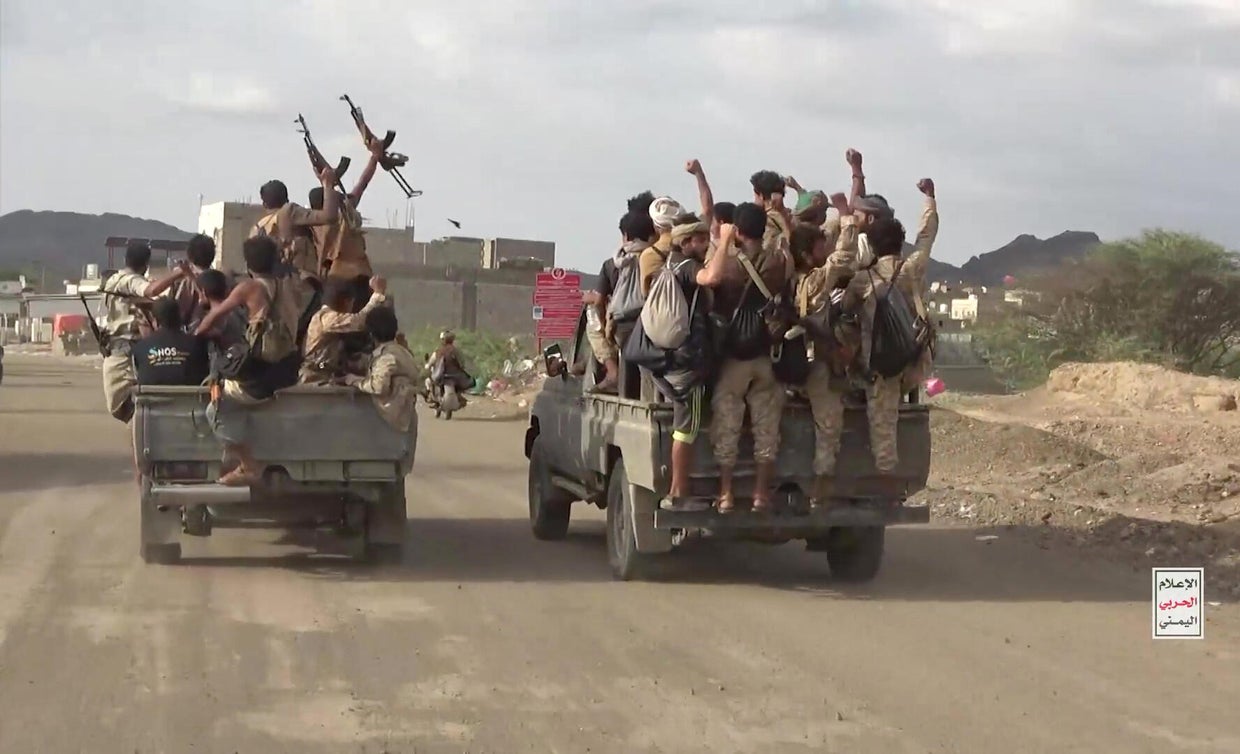
Houthi rebels. CBS News/Houthi handout.
President Trump is facing a difficult decision due to Saudi Arabia's difficulties in dealing with the Houthi rebels in Yemen. CBS News. The Houthis have been effective in battle, taking over the west coast of Yemen and launching major strikes across Saudi Arabia. An American Citizen was killed in one of their strikes on Saudi infrastructure, during an attack on King Khalid International Airport. Trump warned the Houthis on social media, saying he was "looking at" striking the Houthis. However, strikes may be unlikely for many reasons, most notably the midterm elections. For their part, the Houthis have vowed to not blockade the Red Sea and Gulf of Aden to any ships that aren't Saudi Arabian. The Saudis, however, have pushed America to launch strikes. Current support from the United States has been limited to intelligence sharing, targeting info and some limited logistical support.
My Comment:
One thing is clear, unless something major changes, like a blockade being launched by the Houthis, or American interests being targeted directly, we won't see any action in Yemen until after the midterms. Trump would pull the trigger if the facts on the ground force his hand, but as of this writing, that is not the case. I don't think a fresh conflict with Yemen would move the needle at all in the midterms, anyone who would otherwise support Trump and would be upset over a foreign policy move probably isn't voting in the first place.
But a fresh conflict would likely increase oil prices and that is something Trump is extremely focused on right now. Indeed, it's so important that he's actually, finally, pressuring Ukraine to stop attacking Russia's oil facilities. President Trump does face a difficult choice in how to handle this because there are few chances to avoid higher prices regardless.
I am guessing he is going to try and thread the needle. Trump's threats are probably an effort to remind the Houthis that they signed a peace deal with the United States and attacking US interests, indirectly, could damage things. The Houthis say they don't want war with the United States and that is mutual, but if Saudi energy infrastructure is hit or more American citizens get killed, their words don't much. I am guessing this is Trump's way of pressuring them to stick to military targets and not launch attacks against civilian targets like airports.
This is also a message to the Saudis. America essentially refused their call to war, which is awkward because the Saudis are a critical US ally. We are helping them, but we have not joined the conflict like they would have liked. This message is saying to the Saudis that they haven't been abandoned completely and that the US will help to at least try and get the Houthis to not target things like airports and oil production.
The Yemen conflict has been consistently annoying and dangerous, and much of that is due to the Saudis themselves. They have not been effective in fighting the Houthis despite their obvious tech and military advantages. Most critically, they lashed out against their UAE allies who were actually effective in controlling the Houthi rebels. Everything went bad after they did that, and it's a major reason why the Houthis are currently winning the war.
Of course, the Saudi demands for action won't actually do too much to end the conflict with the Houthis. They have proven resilient and though American air strikes could help, they would not do much to actually end the threat. Remember, we have struck at the Houthis before, as recently as last year, and it hasn't really changed their capabilities. What is actually needed is ground forces to fight the Houthis directly, and the chances of America doing that are approximately zero. If things really go horribly for the Saudis, it's possible US airstrikes could change things, but as bad as things are for the Saudis, that's not where they are now.
Keep in mind that the US is still recovering their weapons stocks after the Iran conflict, which isn't actually over. If there was a peace deal with Iran in place, it wouldn't matter too much, we still have large stockpiles of weapons, but the Iran conflict was high intensity. We are low on missile interceptors, certain missiles and other weapons and it would push our resources to be involved with potentially two conflicts at once.
So what's my take? I don't see us joining the Houthi conflict. It's extremely unlikely before the midterms, but even after it, I don't see it happening. Like I said, the Houthis could screw it up if they declare a blockade and or kill a bunch of Americans, but they have little incentive to do so and major incentives to not do so. Trump's comments are most likely saber rattling an nothing more.

No comments:
Post a Comment